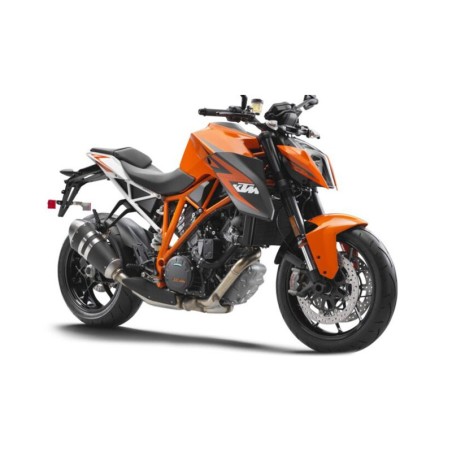
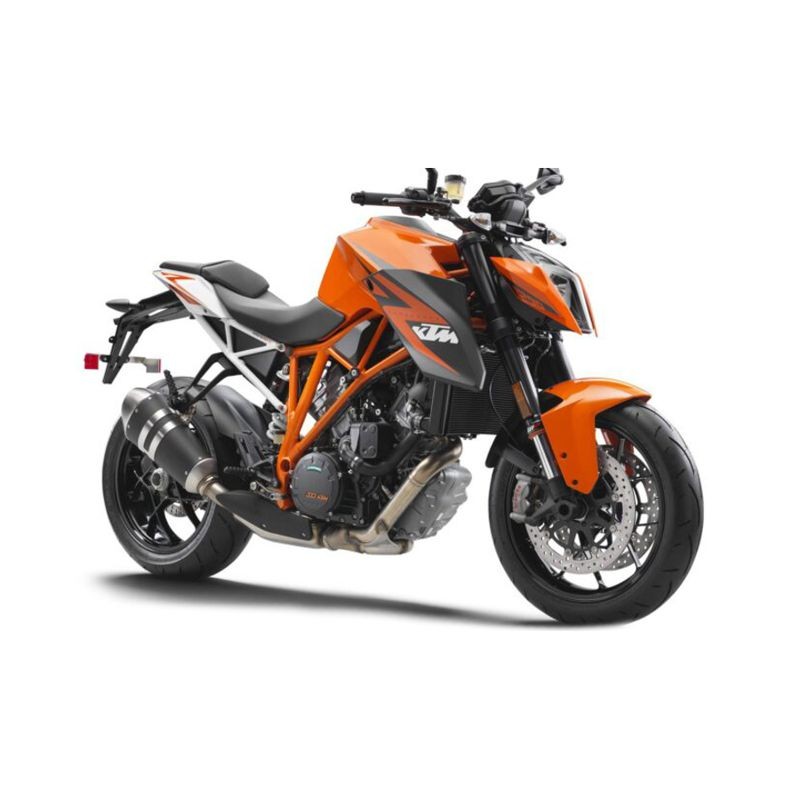
2014-2016 Index
General Information & Safety
- Introduction, table of contents, and guide to means of representation (Sections 1 & 3).
- Important safety advice, operational warnings, and guidelines (Section 2).
- Serial number locations for the frame, engine, and vehicle identification (Section 4).
- General motorcycle overview, technical locations, and checks (Section 5).
Chassis, Suspension & Steering
- Fork service, triple clamps, steering head bearings, and handlebar controls (Sections 6 & 7).
- Shock absorber servicing, linkage, and swingarm removal/maintenance (Section 8).
- Wheels, tires, balancing, axles, and wheel bearing replacements (Section 13).
- Mask, front fenders, and decal placement guidelines (Section 12).
Engine Mechanical, Overhaul & Fuel Systems
- Exhaust system removal, catalytic converters, and silencer service (Section 9).
- Air filter housing, intake snorkels, and air box maintenance (Section 10).
- Fuel tank removal, seat assemblies, and body trim panel servicing (Section 11).
- Complete engine removal, installation, and overhaul procedures (Section 17).
- Clutch system, master/slave cylinders, and basket servicing (Section 18).
- Gearshift linkage, external mechanisms, and selector drum servicing (Section 19).
- Water pump maintenance, coolant flushing, and cooling system plumbing (Section 20).
- Cylinder head disassembly, valves, camchains, and camshaft servicing (Section 21).
- Engine lubrication system, oil pumps, oil filters, and pressure checks (Section 22).
- Ignition system, spark plugs, and stator/rotor servicing (Section 23).
- Throttle valve body, fuel injectors, and synchronization procedures (Section 24).
Brakes & Electrical Systems
- Wiring harness layout, battery testing, and charging circuit maintenance (Section 14).
- Brake system service, master cylinders, calipers, brake pads, fluid bleeding, and ABS diagnostics (Section 15).
- Lighting system, headlamps, tail lamps, and instrument cluster / dashboard operation (Section 16).
- Comprehensive Electrical Wiring Diagrams (Section 29).
Maintenance, Specifications & Fluids
- Technical data, tightening torques, clearances, and capacities (Section 25).
- Cleaning guidelines, protective treatments, and corrosion prevention (Section 26).
- Off-season storage procedures and preparation (Section 27).
- Periodic service schedule, maintenance intervals, and checklist (Section 28).
- Recommended operating substances, engine oils, fork oils, and brake fluids (Section 30).
- Auxiliary substances, locking compounds, and greases (Section 31).
- Special service tools list and part numbers (Section 32).
The High Cost of Blind Wrenching
Modern European sportbikes leave zero room for error. The 1,301cc 75-degree LC8 engine acts as a highly stressed member of the chassis, meaning physical alignment directly dictates electronic health. Incorrect torque affecting sensor readings is a brutal reality on this platform. If a technician overtightens the steering neck or engine mounts, that minute mechanical distortion can skew camshaft pulse generator gaps or trigger erratic handling dynamics.
Furthermore, overlooking grounding issues affecting system performance is a trap that easily catches mechanics off guard. The immense heat radiating from the massive exhaust headers can bake the wiring harness over time. Without OEM service instructions, replacing a thousand-dollar control module because a simple ground wire frayed against the cylinder head is a fast track to ruining your shop's reputation.
Shop Floor Diagnostics & Practical Solutions
High-output V-twins produce violent vibration and extreme intake pressures. A common issue technicians encounter on the 2014-2016 models involves the electronic throttle control. You might hook up your diagnostic tool and pull a hard Throttle Valve Body error.
One frequent diagnostic mistake is immediately assuming the electronic actuator has fried. In many real-world repair cases, the actual problem is a mechanical bind—either from severe carbon buildup on the butterfly valves or a slightly misaligned air filter box creating a physical obstruction. The ECU detects the resistance and shuts the system down to protect the rider. This technical resource provides the specific voltage parameters and signal testing procedures required to verify if the unit is electronically dead or just mechanically jammed.
Unleashing the LC8: Technical Architecture
Packaging 106 ft-lbs (144 Nm) of torque into a lightweight naked frame requires dense engineering. The battery, Ignition System, and primary ECU sit incredibly close to the rear Cylinder Head and Water Pump. When performing routine valve clearance checks, maneuvering around these sensitive electronics requires precision. You cannot simply yank components out of the way. The provided documentation details the exact sequence for safely removing the Fuel Tank, Seat, and Trim to access the top end without snapping fragile plastic connectors or pinching a fuel line.
Comprehensive Systems Engineering
This 314-page workshop reference provides a complete diagnostic roadmap. Rather than generic overviews, you get granular data on the motorcycle's most critical systems:
- Drivetrain & Power Transfer: An extensive engine teardown guide that includes the Clutch, Shift Mechanism, and complete Lubrication System overhauls.
- Electronic Management: Deep-level KTM Super Duke R parasitic draw diagnosis, fuse box layouts, and complete Wiring Harness schematics.
- Chassis Dynamics: Factory tightening sequences for the Fork, Triple Clamp, and the single-sided Swingarm/Shock Absorber assembly.
- Safety & Control: Step-by-step rebuilding procedures for the high-performance Brake System and intricate Lighting System networks.
Digital Blueprint Features
- Format: High-resolution, 67 MB searchable PDF.
- Navigation: Fully hyperlinked Table of Contents to jump instantly to the Cooling System or Exhaust sections.
- Clarity: Zoom capability for complex wiring circuits and intricate mechanical assemblies.
- Portability: Works seamlessly on your shop PC, iPad, or Android phone.
Workshop Floor Guarantee & Delivery
We know that a hyper-naked tying up a service lift is dead money. That is why we engineered our delivery for zero wait time.
- Checkout Options: Secure your digital file using Apple Pay, Google Pay, PayPal, or a standard Credit Card.
- Instant Dispatch: The second your transaction clears, your private download link is fired directly to your inbox and securely backed up in your user account.
- Access Rules: Your link stays hot for 10 days, allowing up to 10 unique downloads so you can save the mechanical and electrical repair PDF to all your devices.
- Failsafe Protocol: If your garage Wi-Fi drops out mid-download, just reach out. We will deploy a secure Dropbox backup transfer.
- First time using a digital manual? Check out our quick walkthrough video here: https://servicemanuals.info/How-to-Download.mp4
Access the full PDF guide now and eliminate guesswork in your repairs.
Frequently Asked Questions
Why does my LC8 engine occasionally drop into limp mode after a hard acceleration?
Often, aggressive riding combined with the extreme vibration of the 1,301cc V-twin can vibrate battery terminals loose or damage the primary chassis ground. The ECU misinterprets this momentary voltage drop as a critical system failure and triggers limp mode. The included wiring diagram maps out the entire ground network and CAN-bus communication lines so you can isolate the specific electrical break.
What are the exact procedures for setting the valve clearances on the 75-degree cylinder heads?
Maintaining a high-revving DOHC engine demands absolute precision. Section 21 covers the Cylinder Head entirely, providing the factory mechanical clearance tolerances, shim calculation charts, and camshaft timing mark alignments necessary to prevent catastrophic valve-to-piston contact during reassembly.
Can this resource help me track down a slow coolant leak near the engine case?
Yes. The LC8 water pump is integrated tightly into the engine casing. Section 20 breaks down the Water Pump and Cooling System, showing the exact mechanical seals, O-rings, and impeller shaft tolerances. It will guide you through isolating whether the leak is external, or if an internal seal has failed and is pushing coolant into the lubrication system.