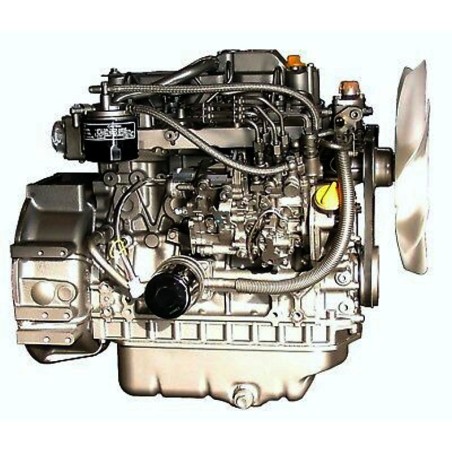
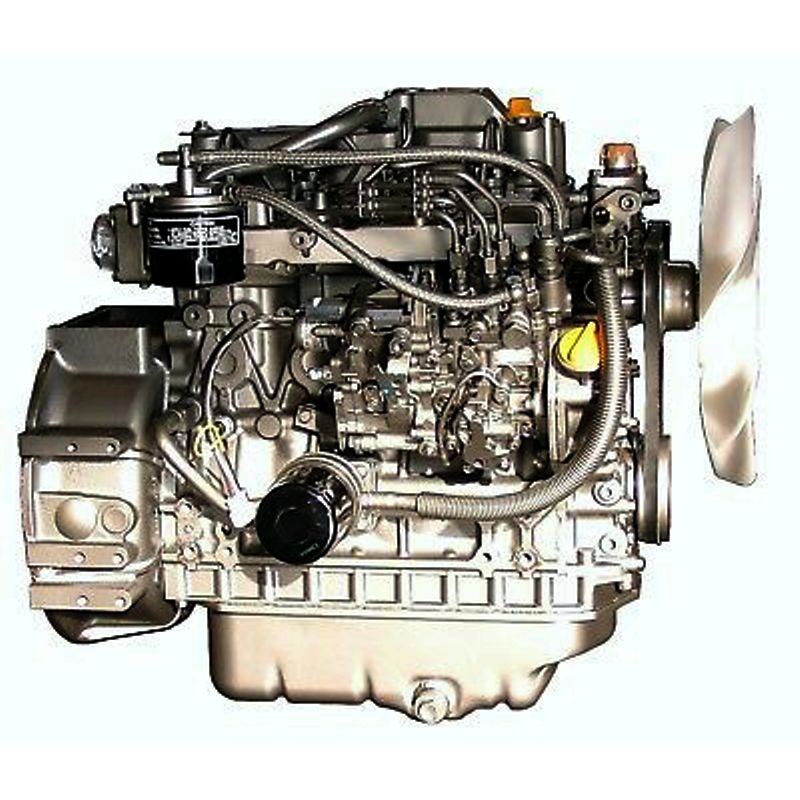
4TNV88 4TNV88B 4TNV88U Index
General Information & Specifications
- Limited warranties, emission system warranties (USA and California regulations), safety statements, and safety precautions.
- Component identification, label locations, engine nameplates, emission control regulations, 97/68/EC directive certified engines, and engine families.
- Function of major engine components, main electronic control features, and cooling system component functions.
- Diesel fuel specifications, bio-diesel fuel guidelines (B20 kit parts list for TNV DI engines), filling fuel tanks, and priming fuel systems.
- Engine oil specifications, service categories, viscosity ratings, checking/adding procedures, and typical capacities.
- Engine coolant specifications, alternative coolants, filling radiators, and typical capacities.
- Model number descriptions, engine speed specifications, principal engine specifications (3TNV82A, 4TNV88, 4TNV88B, 4TNV88U, and related variants), service standards, tightening torques for standard bolts/nuts, abbreviations, symbols, and unit conversion tables.
Periodic Maintenance
- General service introduction, Yanmar replacement parts, and required EPA/ARB maintenance and installation requirements.
- Periodic maintenance schedules and interval procedures:
- Initial 50 hours (engine oil/filter replacement, cooling fan V-belt adjustment).
- Every 50 hours (fuel filter/water separator draining, battery checks).
- Every 250 hours (fuel tank draining, oil/filter replacement, radiator fin cleaning, V-belt checks, governor lever/speed control adjustments, and air cleaner element cleaning).
- Every 500 hours (air cleaner and fuel filter replacements, water separator cleaning).
- Every 1000 hours (cooling system flushing/refill, intake/exhaust valve clearance adjustment).
- Every 1500 hours (fuel injector testing/cleaning, EGR cooler cleaning, crankcase breather inspections).
- Every 2000 hours (fuel and coolant hose replacements, valve lapping).
- Every 3000 hours (turbocharger inspections, EGR valve/lead valve cleaning).
Engine Mechanical & Overhaul
- Cylinder head specifications, adjustment standards, intake/exhaust valves, guides, push rods, rocker arms/shafts, and valve springs for 2-valve and 4-valve cylinder heads.
- Camshaft, timing gear train, crankshaft, piston, and cylinder block specifications.
- Special torque charts, special service tools, and measuring instruments.
- Disassembly, cleaning, inspection, reassembly, and installation of 2-valve and 4-valve cylinder heads, valve bridges, and valve covers.
- Measuring and adjusting valve clearance for 2 and 4-valve heads.
- Crankshaft and camshaft component service: timing gear case covers, backlash checks, timing gear removal, oil pans, pistons, connecting rods, cylinder blocks, honing/boring, and crankshaft bearing oil clearances.
- Exhaust Gas Recirculation (EGR) system: component operation checks, cleaning EGR valves, lead valves, coolers, and connecting elbows.
Fuel System & Electronic Control
- Fuel system introduction: fuel injection pumps, stop solenoids, cold start devices, trochoid fuel pumps, and electronically controlled governors.
- Special torque charts and test/adjustment specifications.
- Fuel system diagrams, components, pump removal/installation, idle sub spring adjustments, and checking/adjusting fuel injection timing.
- Fuel injector removal, testing, disassembly, pressure adjustment, reassembly, and installation.
- Electronic control system overview, harness connections, electrical wire resistance, battery cable resistance, wire sizing, voltage drops, and AWG-to-European conversion tables.
Cooling, Lubrication & Turbocharger Systems
- Cooling system diagrams, coolant pump components, system checks, and water pump removal, disassembly, inspection, reassembly, and installation.
- Lubrication system diagrams, oil pump service information, oil pressure checks, and trochoid oil pump service (disassembly, inspection of clearances for outer/inner rotors, side gaps, and boss/shaft clearances, followed by reassembly).
- Turbocharger specifications, troubleshooting (excessive smoke, white smoke, oil decrease, output loss, slow response, abnormal sound/vibration), component functions, washing procedures, periodic inspections, rotor play/run-out checks, waste gate tests, and actuator leak tests.
Electrical Systems (Starter, Alternator & Dynamo)
- Starter motor specifications, troubleshooting, components, removal, disassembly, cleaning, inspection (armature, field coil, magnetic switch, pinion clutch), reassembly, pinion projection length checks, and no-load testing.
- Alternator and dynamo information, specifications, troubleshooting, component diagrams, wiring schematics, standard outputs, removal, disassembly, reassembly, and installation (including dynamo stator coil continuity and regulated output testing).
Failure Diagnosis & Troubleshooting Manual
- Compression pressure measurement methods, measured values, and diagnostic correlations.
- Quick reference table for troubleshooting and failure diagnostic lists.
- Diagnostic Trouble Codes (DTCs) general description and code lists.
- Analog input related failures: rack position sensors, accelerator sensors, atmospheric sensors, ECU temperature sensors, cooling water temperature sensors, sensor 5V feeds, and power supply voltages.
- Pulse sensor related failures: speed sensors and engine rotational speeds.
- Contact output related failures: rack actuator relays, start assist relays, CSD solenoid valves, and EGR valves.
- Contact input related failures: oil pressure faults, battery charge faults, water temperature switches, air cleaner switches, and oil-water separator switches.
- Actuator related failures, E-ECU internal errors, CAN communication errors, and immobilizer faults.
- Failure diagnosis methods and procedures: E-ECU pin layout diagrams, 2G eco-checker harness usage, foot pedals, flashing patterns of failure indicators, and 2G-type eco-governor speed-fluctuation factor analysis.
Electronic Control & Eco-Governor Diagnostics
In many engine rebuild cases, a perfectly assembled mechanical block will fail to run correctly due to a misdiagnosed electronic control system fault. A common issue technicians encounter on the 4TNV88 series is interpreting an Eco-Governor speed-fluctuation as a failing fuel injection pump. Replacing the pump without verifying the electronic control harness connections or running a factor analysis often results in wasted time and money.
During troubleshooting, this workshop reference empowers mechanics to properly utilize the failure indicator lamp's flashing patterns. By cross-referencing these patterns with the extensive DTC code list, you can pinpoint whether a stalling issue originates from an internal ECU communication error or a degraded analog input signal. For this reason, the included electrical wire resistance charts and voltage drop specifications are indispensable for verifying sensor integrity before tearing into the mechanical components.
Precision Clearances in the Block Architecture
Tearing down the core of this engine demands strict adherence to OEM repair instructions. The structural differences between the Yanmar 4TNV88, 4TNV88B, and 4TNV88U models mean that tolerance deviations cannot be ignored. In practical diagnostics, failing to recognize whether you are working with a 2-valve or 4-valve cylinder head will drastically alter your valve clearance measuring and adjustment procedures.
One frequent mistake during reassembly is neglecting the specific clearance tolerances within the lubrication system, particularly the trochoid oil pump. If the rotor tip clearance exceeds the service limit, the pump will struggle to maintain adequate oil pressure at idle, leading to accelerated wear on the camshaft and timing gear train. This manual details the exact micrometric measurements required for the crankshaft, pistons, and cylinder block, alongside the critical tightening torques for all standard bolts and nuts to guarantee mechanical integrity.
Fuel Delivery & Turbocharger Maintenance
High-pressure injection and forced induction systems require precise handling. The fuel system on these engines operates under extreme pressures to meet strict emission control regulations. If the fuel injection timing is even slightly off, or if the idle sub spring adjustment is improperly calibrated, the engine will exhibit excessive smoke and elevated exhaust gas temperatures.
Furthermore, this guide outlines the necessary periodic inspection and washing procedures for the turbocharger. Carbon buildup inside the turbine housing can restrict airflow, triggering EGR system faults and reducing overall power output. By following the step-by-step turbocharger component function checks and washing guidelines, technicians can restore optimal boost pressure and prevent premature bearing failure within the turbo assembly.
Digital Workshop Advantage
Bringing a bulky, 600-page binder onto a cramped job site is highly inefficient. This digital resource is delivered as a high-resolution, fully searchable PDF. You can instantly locate the exact electrical wiring diagram you need, zoom in on the component identification labels, and print out specific pages covering the injection timing adjustments to keep directly on your toolbox.
Digital Workshop Access & Security Protocol
We understand that when an excavator or generator is down, you need technical data immediately. Our delivery system is designed for instant shop-floor retrieval.
- Checkout Process: Secure your download using Visa, Mastercard, PayPal, Google Pay, or Apple Pay.
- Instant File Deployment: A secure download link is automatically sent to your email inbox and added to your customer account the moment your transaction completes.
- Access Guarantee: Your specific download link remains active for 10 days, permitting up to 10 separate downloads to ensure you can save the file across multiple devices (tablet, shop laptop, and phone).
- File Backup: Should you experience a hardware failure, simply contact support. We provide a secondary Dropbox delivery to get you back up and running.
- Video Tutorial: Unsure how to access your new file? Watch this quick demonstration: https://servicemanuals.info/How-to-Download.mp4
Download the comprehensive Yanmar 4TNV88 repair manual PDF instantly to eliminate guesswork from your next heavy rebuild.
Practical Diagnostic Use Cases (FAQ)
Why is my engine experiencing surging RPMs under load even after a fuel filter change?
Fluctuating engine speeds on these models are frequently tied to the electronic management system rather than fuel starvation. The manual contains a dedicated "2G-Type Eco-Governor Speed-Flctuation Factor Analysis" section that guides you through testing pulse sensors and actuator related failures to find the root cause.
Are the teardown procedures different for the various sub-models covered in this document?
Yes. The engineering breakdown explicitly separates the specifications and rebuild procedures for the 2-valve cylinder head and the 4-valve cylinder head, ensuring you apply the correct torque sequences and clearance adjustments for your specific engine variant.
How often should the turbocharger be serviced according to factory specs?
The periodic maintenance schedule dictates specific intervals for turbo inspection. Beyond basic checks, the manual provides detailed instructions on the official washing procedure to remove carbon deposits and maintain proper impeller balance without damaging the seals.
What kind of electrical schematics are informed to help with wiring repairs?
The file includes highly detailed electrical wiring diagrams covering the alternator, starter motor, dynamo, and the main electronic control harness connections. It also provides critical data on electrical wire resistance and battery cable voltage drops to assist in tracing high-resistance faults.