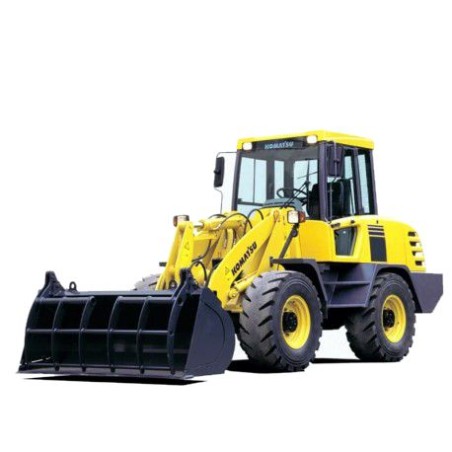
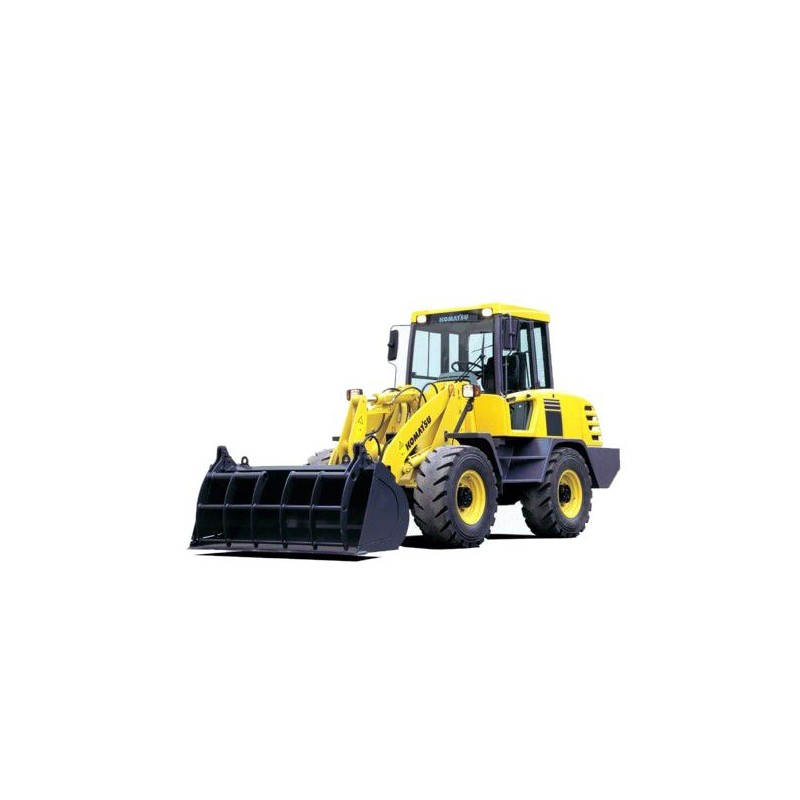
Komatsu WA95-3 Wheel Loader Operation & Maintenance Manual
Operating, safety and maintenance reference documentation for the named machine, within the coverage of the listed manuals. It is not presented as a complete overhaul manual.
Indexed technical areas: engine and mechanical systems, gearbox and transmission, braking and steering systems, suspension and axles, hydraulic systems.
Examples from the original contents: Safety Information 1-3; Changing the Driving Direction 5-19; Draining Off Water and Dirt Deposits From the Fuel Tank 7-41; Overall View of Machine.
Source-listed language(s): English. Language can vary between documents in a collection.
Important document scope / limitation: Operation and maintenance instructions are not advertised as a comprehensive workshop tear-down manual.
Original technical index
- CONTENTS:
- Introduction
- Forword 1-2
- Safety Information 1-3
- Introduction 1-5
- - Features 1-5
- - Breaking in a New Machine 1-5
- Location of Plates, Table-Enter Serial No. and Distributor 1-6
- - Machine Serial No. Plate position 1-6
- - Engine Serial No. Plate Position 1-6
- - Table-Enter Serial No. and Distributor 1-6
- EMISSION CONTROL WARRANTY 1-7
- - EMISSION CONTROL WARRANTY STATEMENT (APPLIES TO CANADA ONLY) 1-7
- Engine Data Plate 1-8
- GARANTIE SUR LE CONTRÔLE DES ÉMISSIONS 1-9
- - ÉNONCÉ DE GARANTIE SUR LE CONTRÔLE DES ÉMISSIONS (APPLICABLE AU CANADA SEULEMENT): 1-9
- Engine Data Plate 1-11
- Why You Should Read these Operating Instructions 1-12
- Notes on Safety Regulations 1-14
- - Correct Use 1-14
- - Safety Notes in the Operating Instructions 1-14
- Equipment 1-15
- - Loading and Transporting the Machine
- Loading and Transporting the Machine 2-2
- - Securing the Articulated Steering 2-2
- - Lifting the Machine 2-2
- - Driving Machine Onto Loading Area of Transport Vehicle 2-4
- - Securing the Machine During Transport 2-5
- - After Transport 2-5
- - Safety
- General Safety Measures 3-3
- - Safety Instructions 3-3
- - Safety Devices 3-3
- - Emergency Exit 3-3
- - Clothing and Personal Protection 3-4
- - Machine Modifications 3-4
- - Before You Leave the Driver's Seat 3-4
- - Mounting and Dismounting 3-5
- - Fire Prevention and Fire Fighting 3-6
- - Fire Extinguisher and First-Aid Kit 3-7
- - Protection Against Asbestos Dust 3-7
- - Protection Against Injuries 3-8
- - Working at High Temperatures 3-8
- - Roll-Over Protection System (ROPS) 3-9
- - Attachment for Protection Against Falling Objects (FOPS) 3-9
- - Attachments 3-9
- - Battery 3-10
- Safety Measures during Operation 3-11
- - Before You Start the Engine 3-11
- - Workplace Safety 3-11
- - In the Driver's Cab 3-11
- - In-Door Operation 3-12
- - Gas, Dust, and Inflammable Vapours 3-12
- - Mirrors, Windows, and Lighting 3-12
- - Machine Operation 3-13
- - Before You Start the Engine 3-13
- - Reversing 3-13
- - Driving 3-14
- - Driving On Slopes 3-14
- - Emergency Lowering System 3-15
- - Working Close-Overhead Power Transmission Lines 3-15
- - Loading 3-16
- - Good Vision 3-16
- - Working On Snow 3-16
- - Height Limitation 3-17
- - Brakes 3-17
- - Working On Loose Soil 3-17
- - Working with the Forklift Truck Attachment 3-18
- - Parking the Machine 3-19
- - Transport 3-20
- - Loading and Unloading the Machine 3-20
- - Transport 3-21
- Safety Measures During Maintenance 3-22
- - Personnel 3-22
- - Prior-Start of Maintenance Measures 3-22
- - Warning Sign 3-22
- - Tools 3-22
- - Safety-Related Parts 3-22
- - Prior-Start of Inspection and Maintenance 3-23
- - Securing the Articulated Steering 3-23
- - Supporting the boom 3-24
- - During Maintenance 3-25
- - Attachments 3-25
- - Working Under the Machine 3-25
- - Keeping the Machine Clean 3-25
- - Specific Measures 3-25
- - Refueling and Topping Off Oil 3-26
- - Coolant 3-26
- - Use of Lighting 3-27
- - High-Pressure Hoses 3-27
- - Handling High-Pressure Oil 3-27
- - Handling of the pressure accumulator 3-28
- - Fan and Belts 3-28
- - Waste Material 3-28
- - Tires 3-29
- - Storing Tires 3-30
- Labeling 3-31
- - Position of Safety Labels 3-31
- - Information Labels 3-33
- - Controls and InDicators
- Overall View of Machine 4-2
- Controls and Indicators 4-3
- - SWITCHES AND CONTROLS 4-4
- - Instrument Panel 4-5
- - Warning Lights 4-6
- - Control Lamps 4-9
- - Measuring Indicators 4-13
- - Switches 4-15
- - Control Levers, Pedals 4-22
- - Articulated Steering Catch 4-28
- - Traction Device 4-28
- - Socket 4-28
- - Door Unlocking System 4-29
- - Alarm Horn for Reverse Driving 4-29
- - Operation
- Running in the Machine 5-2
- Preparing the Machine Start 5-3
- - Visual Checks 5-3
- - Before you start the engine 5-3
- - Before starting working with the machine 5-3
- Adjustments Prior-Machine Start 5-6
- - Adjusting the Driver’s Seat 5-6
- - Adjusting the Steering Column 5-7
- - Adjusting the Armrest 5-7
- - Adjusting the Rear-View Mirrors 5-7
- - Adjusting the Heating and Ventilation System 5-8
- - Adjusting the ventilation system 5-8
- - Adjusting the heating system 5-9
- - Operating the Air Conditioning 5-10
- - Switching on the air-conditioning 5-10
- - Putting on the Safety Belt 5-12
- - Putting on the safety belt 5-12
- - Taking off the safety belt 5-12
- Starting and Switching Off the Engine 5-13
- - Starting the Engine 5-13
- - Warming up the engine 5-14
- - Switching Off the Engine 5-15
- Driving 5-16
- - Start-Up 5-16
- - Starting the machine on slopes 5-18
- - Driving with the high-Speed gear 5-18
- - Changing the Driving Direction 5-19
- - Reverse Driving 5-20
- - Turning 5-20
- - Turning on slopes, embankments or hill flanks 5-20
- Braking 5-21
- - Pulling the parking brake 5-21
- - Releasing the parking brake 5-21
- - Braking with the service brake 5-21
- - If the service brake breaks down 5-22
- - Braking on slopes 5-22
- - Stopping 5-23
- - Parking the machine on a slope 5-23
- - Longer-Distance Driving 5-24
- Operating the Machine 5-25
- - Preparing the Work Equipment 5-25
- - Selecting a work unit 5-25
- - Picking up the work unit (except multi-purpose bucket) 5-25
- - Removing the work unit 5-26
- - Picking up the multi-purpose bucket 5-26
- - Removing the multi-purpose bucket 5-28
- - Tire Service Life 5-29
- - Level indicator for the bucket 5-29
- - Adjusting the Bucket Positioner 5-30
- - Loading 5-31
- - Removing piled up soil 5-31
- - Excavation works 5-33
- - Transporting 5-34
- - Dumping / Unloading 5-34
- - Loading in diagonal direction 5-34
- - V-shaped loading 5-35
- - Piling up material 5-35
- - Planing 5-36
- - Filling up 5-36
- - Taking off soil 5-36
- - Cutting the Ground 5-37
- - Working With the Forklift Truck Attachment 5-38
- - Picking up the load 5-38
- - Precautions For Special Operations 5-39
- - Working in water 5-39
- - Working on snow 5-39
- - Dumping on steep slopes 5-39
- - Working in the vicinity of electrical overhead lines 5-39
- - Operation on slopes 5-39
- - Working on loose soil 5-39
- - After the work is finished 5-39
- Instructions for Winter Operation 5-40
- - Before the cold season 5-40
- - After Operation 5-40
- - After the cold season 5-41
- - Longer Standstill Periods of the Machine 5-42
- - Before the standstill 5-42
- - During the standstill 5-42
- - After the standstill 5-43
- - Troubleshooting
- Troubleshooting 6-2
- - Warning Lights and Indicators 6-2
- - Electrical System 6-3
- - Engine 6-4
- - Hydraulic system 6-7
- - Brakes 6-9
- - Axles 6-10
- - driver’s cab 6-10
- - Emergency Steering Characteristics 6-11
- - Emergency Lowering System 6-11
- - Starting the Engine with a Battery Jumper Cable 6-12
- - Connecting the Jumper Cable 6-12
- - Starting the Engine 6-13
- - Disconnecting the Battery Jumper Cable 6-13
- - Towing the Machine 6-14
- - Towing a Machine with Defective Brakes 6-15
- - Inadequate Braking Effect 6-16
- - Checking the Parking Brake 6-16
- - Checking the Service Brake 6-17
- - Maintenance
- Maintenance Basics 7-2
- - Preparing the Machine for Maintenance 7-2
- - Cleaning the Machine 7-3
- - Precautionary Measures When Cleaning the Machine 7-3
- - Fire Prevention 7-3
- - Working-Area-Dependent Maintenance 7-4
- - Muddy or Wet Working Areas 7-4
- - Dusty Working Areas 7-4
- - Lubricants and Operating Agents 7-5
- - Draining Hot Lubricants and Fluids 7-5
- - Checking the Oil Level and Changing Oil 7-5
- - Changing Filters 7-5
- - Refuelling and Topping off Oil 7-5
- - Oil 7-6
- - Lubricating Grease 7-6
- - Biodegradable Hydraulic Oil and Lubricating Grease 7-6
- - Fuel 7-7
- - Storage of Oil and Fuel 7-7
- - Coolants 7-8
- - Windscreen Washer Liquid 7-8
- - Table of Lubricants and Operating Agents 7-10
- - Lubrication chart 7-11
- - Axles 7-12
- - Released axle oil brands 7-12
- - Replacing Safety-Related Parts 7-12
- - Welding Instructions 7-13
- - Spare Parts and Consumable Components 7-14
- - Electrical System 7-15
- - Fuses 7-16
- - Fuse Assignment 7-16
- - Slow-Blowing Fuses 7-17
- - Tires 7-18
- - Tire Components 7-18
- - Checking the Tires 7-18
- - Checking the Tire Pressure 7-18
- - Torque for Standard Nuts and Bolts 7-20
- Maintenance Schedule 7-22
- Maintenance Prior-Start 7-24
- - Visual Checks 7-24
- - Cooling System, Checking the Coolant Level, Topping off Coolant 7-24
- - Engine, Checking the Oil Level, Topping off Oil 7-25
- - Engine, Draining off Oil 7-26
- - Checking the Fuel Level, Refueling 7-27
- - Checking the Controls 7-28
- - Checking the Electrical Connections 7-28
- - Heater / air conditioning: checking rate of air flow 7-29
- - Other Maintenance Measures Prior-Start 7-29
- Maintenance upon demand 7-30
- - Checking the air-conditioning system 7-30
- - Checking the coolant level 7-30
- Maintenance Every 10 Operating Hours 7-31
- - Lubrication 7-31
- Maintenance After the First 50 Operating Hours 7-32
- - Engine, Changing Oil and Replacing the Oil Filter Cartridge 7-32
- - Replacing the Oil Filter Cartridge 7-33
- - V-Belt, Checking the Condition 7-34
- - V-Belt, Checking and Adjusting the Tension 7-34
- - Hydraulic System, Replacing the Filter Insert 7-35
- - Checking and Tightening the Wheel Nuts 7-36
- - Front and Rear Axle, Changing Oil 7-37
- - Planet gear 7-37
- - Differential 7-37
- - Transfer Gear - Changing Oil 7-38
- Maintenance Every 50 Operating Hours 7-40
- - Checking cooling System, coolant level in the radiator and expansion tank 7-40
- - Draining Off Water and Dirt Deposits From the Fuel Tank 7-41
- - Checking the Service Brake and Oil Level, Refilling Oil 7-41
- - Checking the Battery and Acid Level 7-42
- - Re-charging a built-in battery 7-43
- - Lubrication 7-44
- - Lubricating points of the work equipment 7-44
- Maintenance Every 100 Operating Hours 7-45
- - Draining the Water Separator, Removing Water and Dirt Deposits 7-45
- Maintenance Every 250 Operating Hours 7-46
- - Changing the Engine Oil and Oil Filter Cartridge 7-46
- - Checking the V-Belt Condition 7-46
- - Checking and Adjusting the V-belt Tension 7-46
- - Front and Rear Axle, Checking the Oil Level 7-47
- - Planet gear 7-47
- - differential 7-48
- - Air Filter, Removing/Re-Installing AND Checking/Cleaning the Filter Insert 7-49
- - Structure of the air filter 7-49
- - Maintenance demand 7-49
- - Removing the filter cartridge 7-49
- - Cleaning or exchanging the filter cartridge 7-50
- - Checking the filter cartridge 7-51
- - Assembling the air filter cartridge 7-51
- - Cleaning the Radiator Segments 7-51
- - Lubrication 7-52
- Maintenance Every 500 Operating Hours 7-53
- - Changing the Fuel Filter and Filter Element 7-53
- - Bleeding the Fuel System 7-54
- - Changing the Filter Cartridge of the Hydraulic System 7-55
- - Cleaning the Water Separator 7-55
- - Lubrication 7-56
- - Transfer Gear, Checking the Oil Level and Refilling Oil 7-56
- - Air Filter, Replacing the Filter Insert, Replacing the Safety Filter 7-57
- - Replacing the Filter Insert 7-57
- - Replacing the Safety Filter 7-57
- - Heater/air conditioning: clean filter fleece of heater unit 7-58
- - Heater/air conditioning: Cleaning the condenser 7-59
- - ECSS-Pressure Accumulator (Option): Checking the Gas Pressure 7-59
- Maintenance Every 1000 Operating Hours 7-60
- - Cooling System, Exchanging Coolant and Cleaning the System 7-60
- - Draining off the coolant 7-61
- - Cleaning the Cooling System 7-61
- - Filling off Coolant 7-61
- - Front Axle, Oil Change 7-62
- - Rear Axle, Oil Change 7-62
- - Transfer Gear, Oil Change 7-62
- - Service Brake 7-62
- - Changing oil 7-62
- - Checking tubes and lines 7-62
- - Checking the brake disks for wear and tear 7-62
- - Adjusting the clearance of the brake disks 7-62
- - Checking and Adjusting System Pressures 7-62
- - Checking and Adjusting the Valve clearance 7-62
- - Checking/Adjusting the Injection Nozzles, Nozzle Pressure/Fuel-Jet Pattern 7-63
- - Checking the Accumulator Gas Pressure OF THIRD CONTROL CIRCUIT 7-63
- - Checking the tightening parts of the Turbo-charger 7-63
- - Checking the gap of the Turbo-charger rotor 7-63
- Maintenance Every 2000 Operating Hours 7-64
- - Hydraulic System, Oil Change 7-64
- - Bleeding the Hydraulic Oil Tank 7-65
- - Cooling System, Checking the Antifreeze Content of the Coolant 7-65
- - Checking the Cooling System 7-65
- - Checking the Fuel Pump 7-65
- - Checking the Fuel and Coolant Tubes, Replacing the Tubes (if required) 7-65
- - Checking the Water Pump 7-66
- - Checking and Adjusting the Fuel Injection and Injection time 7-66
- - Technical Data
- Technical Data 8-2
- - Noise Emission Levels 8-3
- - Vibration Level 8-3
- - Limit Values for Slopes 8-4
- - Maximum slope angle for operating the machine 8-4
- - Tilt angle 8-4
- - special equipment and attachments
- ECSS 9-2
- - Structure and Functioning Principle of the ECSS 9-2
- - Precautionary Measures for Switching on the ECSS 9-2
- - Operation of the ECSS 9-3
- - Switching on the ECSS 9-3
- - Switching off the ECSS 9-3
- - Handling of the Pressure Accumulator 9-4
- - Index
- Introduction
- Forword
- Safety Information
- Introduction
- - Features
- - Breaking in a New Machine
- Location of Plates, Table-Enter Serial No. and Distributor
- - Machine Serial No. Plate position
- - Engine Serial No. Plate Position
- - Table-Enter Serial No. and Distributor
- EMISSION CONTROL WARRANTY
- - EMISSION CONTROL WARRANTY STATEMENT (APPLIES TO CANADA ONLY)
- Engine Data Plate
- GARANTIE SUR LE CONTRÔLE DES ÉMISSIONS
- - ÉNONCÉ DE GARANTIE SUR LE CONTRÔLE DES ÉMISSIONS (APPLICABLE AU CANADA SEULEMENT):
- Engine Data Plate
- Why You Should Read these Operating Instructions
- Notes on Safety Regulations
- - Correct Use
- - Safety Notes in the Operating Instructions
- Equipment
- Loading and Transporting the Machine
- Loading and Transporting the Machine
- - Securing the Articulated Steering
- - Lifting the Machine
- - Driving Machine Onto Loading Area of Transport Vehicle
- - Securing the Machine During Transport
- - After Transport
- Safety
- General Safety Measures
- - Safety Instructions
- - Safety Devices
- - Emergency Exit
- - Clothing and Personal Protection
- - Machine Modifications
- - Before You Leave the Driver's Seat
- - Mounting and Dismounting
- - Fire Prevention and Fire Fighting
- - Fire Extinguisher and First-Aid Kit
- - Protection Against Asbestos Dust
- - Protection Against Injuries
- - Working at High Temperatures
- - Roll-Over Protection System (ROPS)
- - Attachment for Protection Against Falling Objects (FOPS)
- - Attachments
- - Battery
- Safety Measures during Operation
- - Before You Start the Engine
- - Machine Operation
- - Transport
- Safety Measures During Maintenance
- - Personnel
- - Prior-Start of Maintenance Measures
- - During Maintenance
- - Tires
- Labeling
- - Position of Safety Labels
- - Information Labels
- Controls and InDicators
- Overall View of Machine
- Controls and Indicators
- - Control Lamps
- - Measuring Indicators
- - Switches
- - Control Levers, Pedals
- - Articulated Steering Catch
- - Traction Device
- - Socket
- - Door Unlocking System
- - Alarm Horn for Reverse Driving
- Operation
- Running in the Machine
- Preparing the Machine Start
- - Visual Checks
- Adjustments Prior-Machine Start
- - Adjusting the Driver’s Seat
- - Adjusting the Steering Column
- - Adjusting the Armrest
- - Adjusting the Rear-View Mirrors
- - Adjusting the Heating and Ventilation System
- - Operating the Air Conditioning
- - Putting on the Safety Belt
- Starting and Switching Off the Engine
- - Starting the Engine
- - Warming up the engine
- - Switching Off the Engine
- Driving
- - Start-Up
- - Changing the Driving Direction
- - Reverse Driving
- - Turning
- Braking
- - Pulling the parking brake
- - Stopping
- - Longer-Distance Driving
- Operating the Machine
- - Preparing the Work Equipment
- - Tire Service Life
- - Level indicator for the bucket
- - Adjusting the Bucket Positioner
- - Loading
- - Transporting
- - Dumping / Unloading
- - Planing
- - Working With the Forklift Truck Attachment
- - Precautions For Special Operations
- - After the work is finished
- Instructions for Winter Operation
- - Longer Standstill Periods of the Machine
- Troubleshooting
- Troubleshooting
- - Warning Lights and Indicators
- - Electrical System
- - Engine
- - Hydraulic system
- - Brakes
- - Axles
- - driver’s cab
- - Emergency Steering Characteristics
- - Emergency Lowering System
- - Starting the Engine with a Battery Jumper Cable
- - Towing the Machine
- - Inadequate Braking Effect
- Maintenance
- Maintenance Basics
- - Preparing the Machine for Maintenance
- - Cleaning the Machine
- - Working-Area-Dependent Maintenance
- - Lubricants and Operating Agents
- - Axles
- - Replacing Safety-Related Parts
- - Welding Instructions
- - Spare Parts and Consumable Components
- - Electrical System
- - Tires
- - Torque for Standard Nuts and Bolts
- Maintenance Schedule
- Maintenance Prior-Start
- - Visual Checks
- - Cooling System, Checking the Coolant Level, Topping off Coolant
- - Engine, Checking the Oil Level, Topping off Oil
- - Engine, Draining off Oil
- - Checking the Fuel Level, Refueling
- - Checking the Controls
- - Checking the Electrical Connections
- - Heater / air conditioning: checking rate of air flow
- - Other Maintenance Measures Prior-Start
- Maintenance upon demand
- - Checking the air-conditioning system
- Maintenance Every 10 Operating Hours
- - Lubrication
- Maintenance After the First 50 Operating Hours
- - Engine, Changing Oil and Replacing the Oil Filter Cartridge
- - V-Belt, Checking the Condition
- - V-Belt, Checking and Adjusting the Tension
- - Hydraulic System, Replacing the Filter Insert
- - Checking and Tightening the Wheel Nuts
- - Front and Rear Axle, Changing Oil
- - Transfer Gear - Changing Oil
- Maintenance Every 50 Operating Hours
- - Checking cooling System, coolant level in the radiator and expansion tank
- - Draining Off Water and Dirt Deposits From the Fuel Tank
- - Checking the Service Brake and Oil Level, Refilling Oil
- - Checking the Battery and Acid Level
- - Lubrication
- Maintenance Every 100 Operating Hours
- - Draining the Water Separator, Removing Water and Dirt Deposits
- Maintenance Every 250 Operating Hours
- - Changing the Engine Oil and Oil Filter Cartridge
- - Checking the V-Belt Condition
- - Checking and Adjusting the V-belt Tension
- - Front and Rear Axle, Checking the Oil Level
- - Air Filter, Removing/Re-Installing AND Checking/Cleaning the Filter Insert
- - Cleaning the Radiator Segments
- - Lubrication
- Maintenance Every 500 Operating Hours
- - Changing the Fuel Filter and Filter Element
- - Changing the Filter Cartridge of the Hydraulic System
- - Cleaning the Water Separator
- - Lubrication
- - Transfer Gear, Checking the Oil Level and Refilling Oil
- - Air Filter, Replacing the Filter Insert, Replacing the Safety Filter
- - Heater/air conditioning: clean filter fleece of heater unit
- - Heater/air conditioning: Cleaning the condenser
- - ECSS-Pressure Accumulator (Option): Checking the Gas Pressure
- Maintenance Every 1000 Operating Hours
- - Cooling System, Exchanging Coolant and Cleaning the System
- - Front Axle, Oil Change
- - Rear Axle, Oil Change
- - Transfer Gear, Oil Change
- - Service Brake
- - Checking and Adjusting System Pressures
- - Checking and Adjusting the Valve clearance
- - Checking/Adjusting the Injection Nozzles, Nozzle Pressure/ Fuel-Jet Pattern
- - Checking the Accumulator Gas Pressure OF THIRD CONTROL CIRCUIT
- - Checking the tightening parts of the Turbo-charger
- - Checking the gap of the Turbo-charger rotor
- Maintenance Every 2000 Operating Hours
- - Hydraulic System, Oil Change
- - Bleeding the Hydraulic Oil Tank
- - Cooling System, Checking the Antifreeze Content of the Coolant
- - Checking the Cooling System
- - Checking the Fuel Pump
- - Checking the Fuel and Coolant Tubes, Replacing the Tubes (if required)
- - Checking the Water Pump
- - Checking and Adjusting the Fuel Injection and Injection time
- 1